If you're visiting on mobile, please click Tenna for a mobile-friendly version over on Substack!
Welcome to my magazine!
One of the reasons my website exists in the first place was to get me to write again, and thus this used to be my "diary" or a place where I wrote about random things. This past January I was thinking about whether or not I wanted to publish something on Substack, which is a writing platform similar to AO3 where people can post their works. The only bad thing was that I kept comparing myself to the incredibly intellectual think pieces on there and couldn't help but feel like I didn't fit in. Therefore, 23.7 FM was born!
Every month on the 1st and 14th I write articles about a specific theme for that month that revolve around culture, media, and random things. Feel free to flip through the issues and read them!
Issue 1: Cold and Calculating
Calculating Villains, Cursive, and Crime Thrillers
Letter From the Editor
Dearest Reader,
I’ve been having a difficult time carving out what I want to publish on Substack.
I view it similarly to the way I viewed Wattpad back in 2019: a seemingly endless world of possibilities. And yet, I feel so utterly left out of it. Trends are the only thing present when I scroll on here, like the new “whimsical” 2026, the death of smartphones, and the eventual dissolution of social media. In the beginning, I tried to write like this. I wrote a piece about my failing attention span, wanting to relearn cursive, and trying to listen to the radio. Despite trying to mimic what has been done before, I learned nothing and I was left wholly unsatisfied with my writing. So why am I trying to write like other people? Do I want engagement? Do I want someone to finally look at something I’ve done and laud me on how impressive I am? I’m still not quite sure, and I don’t know if I’ll ever be. I think what I truly need to do is to be myself and try and make something of my own that is holistically me.
This is my promise to the readers of Substack. I promise to be diligent in representing myself to the world through one of the things I love most of all: writing.
This issue is called Cold and Calculating for January for obvious reasons: it’s cold outside. In this one, I talk about the calculating villains, an experiment that results in an inability to calculate anything, and a media list filled with some of the most vile villains known to mankind (not really.) Hope you enjoy this inaugural issue of 23.7 FM!
Overanalyzing Fiction
January’s fictional character to overanalyze is The Scarecrow from Batman.
If you look me in the eye and ask me who I think the greatest character in all of Batman is, I would immediately respond with the Scarecrow aka Jonathan Crane. There is some unspoken understanding between myself and Crane’s character. I understand him, why he does what he does, and that is what makes him so special to me personally. It’s hard to place exactly where this miniature obsession began, although it probably started when Christopher Nolan decided to cast Cillian Murphy as Crane and then give him the sexiest, sluttiest pair of glasses to ever exist. This infatuation with Murphy led me to do lots of research on Jonathan Crane, which has changed my life in a myriad of ways (one of them resulted in me being initially exposed to Gotham, another led to a flirtation with Psychology). Crane is cold, calculated, and focused on his work. He does what he does not for the enjoyment (although it can be inferred that that naturally bloomed over time), but to experiment. What lengths wouldn’t one driven scientist take to prove that he’s right? Crane assumes the identity of the Scarecrow for his crimes to get back at the people who tormented him, which directly interferes with any preconceptions of him not having emotions in his work. He is a walking enigma (pun sort of intended) and an oxymoron of himself. He’s a trauma victim who uses his stereotypical identity of a calculated strategist and scientist to make decisions that he tries to convince himself are for science, but are really a way that he’s fighting back at everyone who has wronged him in the past. He’s a brilliant character, and one that I cannot recommend researching enough.
Because there are so many versions of these characters, I also decided to tell you my favorite version of them. For Jonathan Crane, Vincent Kartheiser’s portrayal in Titans is my favorite. I feel like not many incarnations of Crane focus on how emotional he truly is, except for Titans. In the show, he is painfully aware of his own situation due to his previous work as a psychiatrist, and yet seeks out other people (his mother and Batman) to diagnose him in a feeble attempt to convince himself that he is not ultimately flawed himself. He is surprisingly charming, and is not treated like a joke when he walks into a room (cough, Arkham Asylum, cough, the Animated Series, cough, most Batman media) all while being ultimately likeable to the audience (sorry, that might be just me). I just think he is the star of the third season because of how unassumingly complex he is under the surface. Have you ever paused to look at his cell in Arkham? Probably not, but the guy has cat photos above his desk. What does that say about him? More importantly, what does that say about him that previous incarnations of his character have been unable to come close to saying about him? All in all, Kartheiser’s Jonathan Crane is spectacular and he’s my favorite version of Jonathan Crane because he actually feels like a person instead of a facsimile of some kind of calculated scientist.
Experiment
This month’s challenge was to write in cursive.
Supposedly it only takes (at a minimum) 18 days for a habit to form. Also supposedly, I think it’s funny to trick my brain into doing weird things. I was scrolling one day and I saw a video where a woman was trying to convince the viewer to write in cursive for a few reasons, but only one really stuck out to me: no one can read cursive anymore, so if you journal in cursive no one can read it. I, unlike most of the world, remember cursive and I write all of the time in my sketchbook. So I figured why not write in cursive for these 18 days and see how fast it takes root in my brain?
I started simple with writing just like I remembered from back in 2nd grade. Writing took me a million years and I kept itching to go back to writing like I normally do in print. My cursive was so utterly atrocious that I can barely read what I wrote the first day I started taking it seriously. I also wrote super big, something that we will see changes by the end of the experiment. If you are beginning to write in cursive again for funsies like I did, make sure you have big pages. My sketchbook is bigger than what I normally write on, so I had lots of room to remember the flourishes of cursive. Handwriting, in my mind, is like an accent. No matter what accent (cursive/”British”, print/”American”) you have, you still have the same voice. My handwriting style from print is starting to show up in my cursive a couple of days later. I still have to really think about how I’m going to write words and commonly have to go back and spell words correctly, but overall it’s not too shabby.
Well into week 2, I started writing much quicker than before, but don’t have any time to stop and think about how a word is spelled. When I normally write big words, I can stop mid-sentence and think about the letters that come next. With cursive, I feel rushed to finish the word because I cannot keep up with the speed of my mind or the speed of my hand. By the time a week and a half had passed, I completely stopped being able to write in print. I had started college back up again and was handed a sheet of paper to write on, to which I instinctively started writing cursive on. I tried to write in print several times, but I would have to exert the same effort it initially took me to write in cursive.
After my 18 days were up, I started to unnaturally flip back and forth between print and cursive. All of a sudden, I would write a cursive letter in the middle of a print word or I would have to actively decide which way I was going to write something. I started to freak out. Was I starting to think in cursive? Am I destined to forever write in cursive because I thought I could mess around with my brain? So, I started writing in print again. You know how people with non-American accents think that Americans talk super slowly? Yeah, that was me when I changed to print. All of a sudden, I was writing in slow motion, unable to keep up with how quickly I was thinking. I have a page of notes for a class written in print and I genuinely thought I was going to die while writing that page because it all felt so incredibly slow.
Even now after almost a month of recovering from this stupid experiment, I am still getting my sea legs back. I used to be able to write whole pages of notes with no problem, and now writing half of a page is exhausting.
Please never do this.
Issue 2: Blank Slates
Vision Boards, Decluttering, and Cleaning Up
Letter From the Editor
Dearest Reader,
The beginning of the year has been touted by many to be an opportunity for a blank slate. In this issue, I want to ask about whether someone can turn their year around even if they missed the “full rebrand” that happens on January 1st. My January, for example, was full of construction projects, missed assignments, a gym membership I used for three days, and constantly pondering about my future in life. Recently, I’ve not been doing super great in the mental health department. It seems like I’m doing everything and nothing at the same time, and the constant subconscious comparison with others my age is finally getting to me. However, I am determined to turn my 2026 around in February. That’s what inspired making an issue about how every day is a fresh start, because it truly is. Hopefully it can help some of you too.
In this issue, we’re going to discuss making vision boards, decluttering and reorganizing my space, and consciously engaging with what we consume.
Challenges
This month’s challenge is to make a vision board.
I’ve made lots of vision boards in the past, specifically, I really bought with the concept of reframing my life in the early months of 2025. I watched all of the self-help videos I could, read the books, listened to the podcasts, but it all seemed to fall apart. So I decided to make one for 2026 in early December.
So why is my challenge to make a vision board if I already have one? This time, I’m being conscious about the pictures I am choosing. I want to pick photos that truly reflect how I want to spend my 2026, not this idealized version of me who is not tangibly achievable.
Step 1: Write down actual goals to achieve in 2026.
Creative:
-Keep up with 23.7FM bimonthly for an entire year.
-Complete at least one creative project a quarter (every three months) if not more.
-Start taking at least one photo on my walks.
-Journal or draw six times a week to remember what happened on days.
-Finish a book once a month
Friends:
-Go to movie nights with my friends every week.
-Go somewhere new/try something new once a month.
Fitness:
-Walk outside or go to the gym six times a week (weather and time permitting)
-Replace sugar and starchy foods with whole fruits.
Step 2: Everyone’s favorite step… go to Pinterest and find pictures that align with these goals.
Step 3: Put it all together.
Dining Room
This month’s dining room obsession is decluttering and organization.
Right now, the carpet is being ripped out of my room and I have the opportunity to go through everything I own. It’s been interesting to say the least. I keep getting bogged down by the weight of having to peruse through everything and find myself completely paralyzed from the weight of making such a seemingly important decision. That, coupled with having to recognize how much I’ve accumulated over the years, has taken a large mental toll on me.
You see, I haven’t always had this obsession with cleanliness and organization. I inherited half-hoarder from my dad and half-sentimental from my mom. When I was younger, it seemed like I could never keep my room clean. I was always the type of kid to have absolutely everything laying out all over the floor, living out of clothes that never left my stack of laundry baskets and drinking out of week-old water from the millions of stacked cups. And I tried being clean. Years of my parents entering my room and audibly sighing had caused me to go down the organization rabbit hole. I watched Marie Kondo’s show on Netflix tons of times, tried and failed to get tips from my sister, and made various attempts to clean it. But again and again, I tried and failed. But I guess here is the story of how I miraculously decided to organize and get my life together.
I wanted more than anything to go to a college away from home. I decided to get my “away from home” through living in the dorms. You can probably guess that I did not live the dorm dream where I lived with someone I became best friends with. I had a roommate who would not clean up after herself. Out of all my messiness, I considered the worst sin to be food left out. My clothes could be scattered on the floor, but as long as I know which ones are clean I don’t care. Posters could be falling off of my falls, but at least I had some decoration. Water cups could be out, but soda cups could not. As you could again probably infer, my roommate was not of the same mind. I expected myself to be messy as well, but I wasn’t.
I like to think that my first theory is either because I liked comparing my clean space to her messiness, or I was so scared of being judged that I was forced into cleanliness (a version of the theory that appeared after I shared a room where my space was clear view of anyone walking in the door when I lived in Florida).
When I was back at home, I had this sudden urge to go through everything I owned. See, I usually had a very unsavory duo of sentimental hoarding guiding all of my decisions. If something was cute and I liked it for as long as I was in a store, I would buy it. I had been doing that ever since I had any money to spend at all, which was probably since I was 10 going to the mall with my friends.
At the dorm, I naturally had less things to worry about because I couldn’t move everything I owned. At home, I had hoarded things from ever since I was young. I realized that I was messy because I didn’t have a place to put everything. I started watching all kinds of “un-hauling” and cleanout videos, trying to mimic it for myself. What really made a difference in my life? What did I enjoy? Ever since I seriously went through my own things, I have cleared both my mind and my space. I have been able to do things that I never thought possible (I have a COUCH in my room), and I have discovered so many more hobbies through making space for the things that I love.
It does, in fact, get better. You just have to learn how you work. For instance, I need to be able to see what I own to enjoy it. There’s no point for me to put everything in a box, I need to be able to see it with my eyes. Also I need to repeatedly go through the things I own, that way I don’t have to find places to put things that I cannot store. I feel like everyone can become clean over time. All it takes is a few times watching Marie Kondo and constant comparison to other people! Here are some things I’m planning to organize:
-I was an art major, so I own a bunch of supplies that I’m never going to use. I plan to go through and give some of my supplies I don’t use to my friends or donate it to this special area we have in the art building. I think it’s fun to be a crafty girl, but I need to actually use the scraps I have to junk journal before collecting anymore. Luckily for me, I have lots of creative friends, so I’m planning on giving them most of what I don’t use.
-Sentimental items are really hard for me to let go of. I’ve recently come up with several ideas on how to scrapbook items to make it into one cohesive place. I really want to use the scanner that is built into my mom’s printer so I can also have scans of bigger items, that way I don’t have to actually keep them. Scrapbooking is a great way to combine all of them together in one easy-to-view location.
-Technology and cords has proven to be a difficult thing for me to sort through. I’ve been given more random objects than I can count, more phone cords and other things I definitely have enough of. Because I own a Wii, batteries have also proven to be a pain for me to deal with, mainly because it’s a guessing game about what is charged and what isn’t.
So have fun! I think it’s so much fun to go through what I own, mainly because it makes me grateful about how many things I own. Being able to recall memories with certain items or, if I want to donate them, think about how much good they’re going to give the next person is such an amazing privilege that I get to have. So get organized! Have fun!
Issue 3: To Be Loved is To Be Loved
Break Ups, Futures, and Multidimensional Love
Letter From the Editor
Dearest Reader,
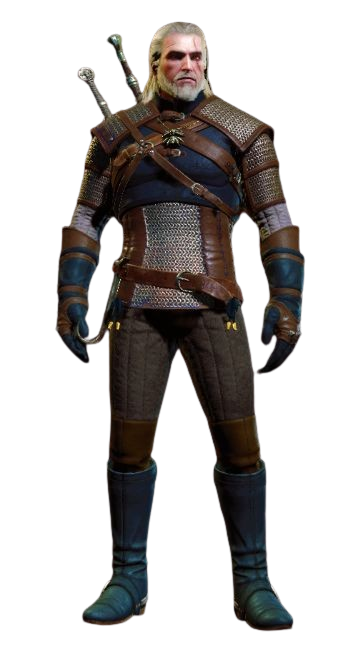
I’ve never actually been in a relationship before. I know, point your fingers and laugh at the poor unlucky girl. You’d probably think I’d hate Valentine’s Day and February, but I think there is so much more to Valentine’s Day than what meets the eye. For me, Valentine’s Day isn’t just about romantic love, but all kinds: platonic friendships, familial bonds, self-love, and obsession just to name a few. Those are the types of love we’re going to dive into for this month, we’re going to explore around and redefine what Valentine’s Day actually means.
In this issue, we’re going to discuss the “break up” scene in the Witcher Season 4, the future of the Walt Disney Company, and some media with complex relationships and themes.
Overanalyzing Fiction
February’s fictional overanalysis is of Jaskier and Radovid’s fight in the Witcher Season 4. Warning that this analysis is purely self-indulgent, and spoilers for the Witcher Season 4, Episode 4.
My most favorite trope of all time is when two people just hate each other, but what happens when two people start to hate each other after having a small fling? Enter my favorite scene from the Witcher Season 4: Jaskier and Radovid’s fight. Now, I’m literally going to go shot by shot and line by line for this because this scene is just a work of art. I will preface this by saying that I didn’t like Jaskier and Radovid’s relationship and that I am incredibly biased towards Jaskier in terms of this fight. For context, Radovid just rose to power against his will and is trying to deal with this role he never expected to have. Meanwhile, Jaskier is traveling with Geralt and finds himself torn between his loyalties to his dear friend and his past fling. Radovid’s advisor is trying to get him in the kingly spirit by engaging Jaskier.
The scene starts with Geralt crying out from being tortured. Jaskier immediately recognizes Geralt’s scream, a sign of how close they have become and how well Jaskier knows Geralt in particular. He asks Radovid what is happening and Radovid says “I don’t know,” a sign of how even in leading his own kingdom, he is blind to the corruption and terror going on around him. It also shows how innocent and naive Radovid is because of his lavish upbringing in the castle, which automatically parallels Jaskier’s similar upbringing as the Viscount de Lettenhove. Unlike Radovid, Jaskier knew the importance of being a part of the people and left behind his comfy spot to do the thing that he believes he was “put on the Continent to do.”
Jaskier implores Radovid to make them stop, mainly because Radovid is literally the King of one of the largest players in the Northern Continent right now (it’s also hinted that Redania is one of the only parts of the North still strong in fighting Nilfgaard at the time other than Rivia, I guess.) Jaskier then starts cornering Radovid while basically begging him to let Geralt go and Radovid lets him get closer, despite Radovid being taller and more imposing than Jaskier. Radovid then talks about his advisor having a plan and Jaskier implores that Radovid doesn’t have to listen to anyone. Radovid then uses this against Jaskier to convince him to stay. Jaskier is a bard. This means that freedom is something that means a lot to him. The ability to travel and tell his stories are the reason that he thinks he’s still alive. For Radovid to use his words, one of his most powerful tools, against him in this moment of weakness for Jaskier is the lowest blow one could possibly make to him. Jaskier slowly takes his hands off of Radovid and distances himself from him.
Then, the most amazing line ever happens, where Radovid says, “Or will you go back to searching for that little girl with your Witcher?” Literally I am clawing at the screen. Not only did Radovid offend Jaskier by asking him to exchange his freedom for HIM, but also now bringing in the fact that he undermines Jaskier’s found family. Also, the use of “your Witcher” instead of “the Witcher” is so incredibly amazing because Radovid doesn’t understand why Jaskier would want to be around someone like Geralt instead of him other than Jaskier showing some type of ownership over Geralt like a pet. Once again just this teeny piece of dialogue shows how Radovid is unable to understand Jaskier’s character in every way. He attempts to take his freedom, the most important thing to Jaskier, his friend in Geralt, and undermines his motivation for wanting to help his friend find the girl that Jaskier had an enormous hand in raising and helping. (On the side, Radovid does this thing with his head when he says “your Witcher” where he sticks his chin out in defiance and it’s so good and only pisses Jaskier off more with his blatant ignorance.)
Jaskier voices his outrage and Radovid meekly says, “You’re the only one left who knows who I am.” Basically, Radovid’s naivety from living in luxury made him believe that he was special in some way to Jaskier. It’s stated and shown that Jaskier can tell what a person is thinking or he can usually spot someone’s motivations. It’s usually hidden underneath plenty of comedic relief and jokes, but Jaskier is incredibly intuitive. Radovid takes this character trait of Jaskier and warps it into some kind of love that Jaskier has for him, despite them not knowing each other for very long.
Jaskier then destroys the man by absolutely dissecting him. At this point, Radovid isn’t trying to be prideful by sticking out his chin, but he is sitting on his throne with tears in his eyes. Once again, Radovid tries to reiterate his “love” for Jaskier, which is really just the ownership he feels (or wants to feel) over Jaskier the same way he believes that Jaskier feels about Geralt. He does not want him by his side so that they make each other better, but so he feels better. He does not show any care about what Jaskier thinks or feels, and takes his insight as a deep obsession. Finally, Jaskier says “you will die like [your brother] too” and you can tell on Joey Batey’s face that Jaskier regrets saying it as soon as it leaves his mouth. HOWEVER, he follows it up with “…alone” which shows that maybe he doesn’t regret it at all. Jaskier has been beaten down by Radovid throughout this entire exchange and now he’s finally broken down his charming facade and is just expressing his anger.
Radovid then stands up and asserts his dominance immediately over Jaskier. It’s like a switch has flipped in his head and he says, “you can’t talk to me like that.” Once again, we see Jaskier’s words bite him in the ass and we can see it on his face that he regrets telling Radovid that everyone has to listen to him. Radovid orders him away, and he’s standing upright with his shoulders all the way back (I forgot to mention it earlier, but I don’t think Radovid ever had stood up straight until this scene). Jaskier then follows it up with, “you know, I might escape my shackles one day. What about yours?” Which harps on the idea of Radovid being forever linked to the throne until the day he dies, destined to be a selfish tyrant.
Anyways, this is my favorite scene in the Witcher Season 4 (second is Leo Bonhart pickling the Rats) because of how nuanced it is. Their facial expressions, Radovid’s movements, and the biting dialogue all amount to an incredibly engaging fight between two men who had similar upbringings but different life experiences. Radovid displays a fundamental disconnect with Jaskier’s character, while Jaskier can see through Radovid clear as day. Despite the power imbalance, Jaskier will always have the upper hand with Radovid because of his intuition. That is until Jaskier crosses a line and Radovid starts to realize the amount of power he truly has and uses it to manipulate and hurt those around him.
Anyways, I hope we see Radovid go full-fledged tyrant in the next seasons because I want them to have another fight so badly.
Dining Room
February’s dining room obsession is of the future of the Walt Disney Company with the appointment of Josh D’Amaro as the new CEO. I know it doesn’t fit perfectly into the theme of the issue, but I will always love the Walt Disney Company for everything it has given me and other people around the world. I only want what’s best for it.
I hate to say it, but I am a Disney Adult. All my life I’ve wanted to work for Disney in Imagineering or Animation, so I take any structural changes of the company to heart. This dining room talk is going to be somewhat of an overview of how I believe the company is doing now and how I hope it changes under D’Amaro’s supervision.
Animation Studios: In my opinion, Walt Disney Animation Studios isn’t doing too great. We had Zootopia 2 (which I did not see in theaters, but I heard was decent) come out recently, and it’s just another view of how Disney is grossly underestimating the loyalty of their audience. To believe that a new movie has to be a sequel in order to triple its production budget is a generalization that dilutes creativity and stagnates leadership within the animation division. With the success of KPop Demon Hunters, I hope with all my heart that Disney takes notes and goes back to their musical animation roots.
Personally if I was D’Amaro or Jenn Lee, I would split Walt Disney Animation Studios into two pieces: 2D and 3D. I personally think sequels are fine to keep producing in order to keep stakeholders contributing to new movies, but I think defining a part of the studios for that would be beneficial to keeping creativity flowing. I think the 2D section of animation should focus on going back to the Disney roots and taking advantage of the rampant nostalgia that most Disney Adults yearn for. In my opinion, Disney Adults are where a majority of the money is to be made and making a division not only can focus on this large demographic and making money that way, but it also fulfills what a lot of the audience for these movies is yearning for: another renaissance.
Disney Parks: I am, personally, disgusted by Piston Peak in the Magic Kingdom. I am also equally as disgusted to see Pandora in California Adventure. Overall, I’m not feeling fantastic about the moves that Imagineering is making. I understand that rides and experiences based around IP give a reliability to stakeholders considering new attractions, but I think this money would be better if used elsewhere.
Firstly, new Tomorrowland at Disneyland has been something that guests have been asking for. To not allocate this money to revitalizing Tomorrowland, in my opinion, is a massive mistake in the long run. While I understand how big of a risk it is due to the long-term closure of a large part of the park, I think it is necessary to ensure the longevity of Tomorrowland as a whole. If nothing is done now, it will continue to get more and more outdated until it becomes an absolute necessity to revitalize it. Areas like Autopia and Nemo’s Submarine Voyage need some kind of revitalization, if not to be torn down. (Personally, I think both of these rides should be kept to keep the park open, but I do think they are outdated). Honestly, Tomorrowland is a whole can of worms in itself, but I hope that they start updating it and making it more cohesive little by little.
Next, Piston Peak. Look, I understand that Tom Sawyer’s Island wasn’t at the top of anyone’s list to visit, but Magic Kingdom desperately needed the wide open space of the river. I also understand that it was torn down partially to keep roads open on the way to Villains Land, especially over by Haunted Mansion. However, the tearing down of TSI signals to me and to a lot of other Disney Parks fans that nothing is sacred anymore. I firmly believe that with a little bit of marketing, TSI could have become a place that guests wanted to go to. There’s a restaurant on TSI that isn’t used anymore, but could have been a massive draw for crowds. Watching from TSI is also the best way I’ve ever seen Festival of Fantasy, and I think if the Parks marketed it as a premiere viewing spot and installed some speakers, it would have drummed up foot traffic. I even believe that getting rid of the Liberty Belle and extending TSI out to be a walkway to and from Villains Land like how Animal Kingdom is sort of set up with the wheel and spokes would have been a better use of space and drawn people into the island. All in all, we needed the river to break up the claustrophobia that Magic already drums up for a lot of people, including myself who worked there.
My last point is going to be about Pandora. Genuinely, I think the worst use of that space ever is for one big E-Ticket of an IP that doesn’t mesh into California Adventure at all. If anything, extend Avengers Campus. Let’s pay the actors who perform and put a longer version of Rogers the Musical in the Hyperion. Let’s put a facade on the side of that building across the way to look like New York and extend Avengers Campus up into the area where Monsters Inc is. If they’re going to get rid of a ride as near and dear to my heart as Monsters, I want it to be something actually good. We can even keep the taxi facade of the cars and make it a tour around the Avengers’ New York. Let’s come up with literally any other worthwhile ideas instead of destroying the Eastern Gateway into Disneyland and making it ONE E-TICKET. How is that a good use of our space, money, and time that could be better spent on improving outdated areas? Nothing can contain my anger at attempting to build a Pandora for little to no reason in Disney’s CALIFORNIA ADVENTURE. At least the Avengers can go to California.
Overall, I’m just upset with the direction that the Disney Parks are taking, and the worst part is that D’Amaro is the Director of Parks and Experiences. I think that the projects that Imagineering are working on all fundamentally misunderstand the types of people who go to their parks.
Disneyland will forever be a “local” park because of how the people of Southern California have taken it in. I even consider myself a local to Disneyland due to my close proximity, and I take pride in it. There is no reason to focus on drawing in crowds from outside of the Southwest when there are only a few Disney hotels to house those visitors. You’re just drawing in crowds to the hotels outside on Harbor. In addition, Magic Key holders would much rather see changes to Quality of Life rather than these flashy additions like Pandora. A revitalization of Tomorrowland would have a much heftier impact on reception to the park from the main source of visitors as well as set it up for many years to come.
Magic Kingdom is a park where people come from around the world to visit, and they most likely spend all of their day in the park. Why are we not emphasizing and updating shaded, secluded areas like TSI for park guests to go to when they need a break? The hustle of Magic Kingdom is why many Disney Parks fans don’t like going to it, and the destruction of TSI confirms that the company doesn’t care about the welfare of its visitors, only how much more capacity we can add onto an already overstimulating park.
I hope that Josh D’Amaro is different from Bob Iger. I hope that the Parks and the Animation Studios get the attention that they deserve for being the two most vital reasons as to why the Walt Disney Company has lasted this long. As a former Cast Member, I was delighted that D’Amaro was chosen as the next CEO. I do have a lot of optimism and hope that he will do his best to work on these two areas in particular. Before we absorb any other companies, we need to focus on improving ourselves first. Improve how the public views Disney, because it’s not a very good look right now. Time will tell, of course, whether D’Amaro is good for the role, but for right now I’m cautiously optimistic.
Issue 4: The Nature of Analog
Smiling Friends, the Radio, and Media
Letter From the Editor
Dearest Reader,
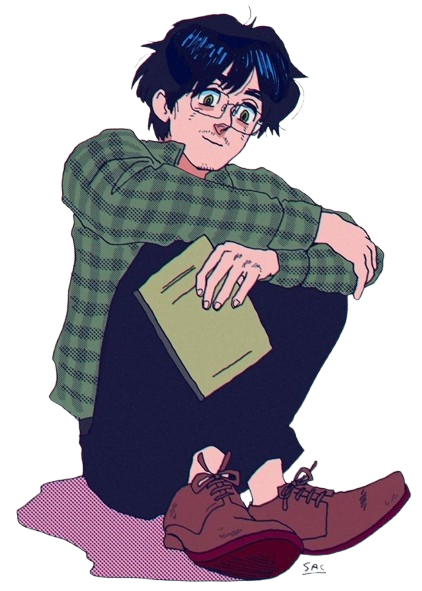
One thing I’ve never understood about the world is how we can look at all of the possibilities and think that it’s a great idea to stuff ourselves into one particular box. I love drawing, coding, filming, writing, calculating, analyzing, managing, cooking, reading, joking and yet I have to choose only one to devote the rest of my life to?
When I told my parents I was going to get a degree in Interdisciplinary Studies, they looked at me like I was insane. What kind of a career could be built upon a degree in multiple things? Recently I went on-demand at a job I had for seven months because, frankly, I was bored. The longest I’ve held a job is a couple of years without feeling trapped, and I work minimal hours at it. I’ve been told to grow up and choose more times than I can count, but I feel completely paralyzed when I have to make that decision.
I’ve tried going over the possibilities in my head over and over again to make the best decision, and yet I can’t. I sit in my chair, writing this, because I’m trying to convince myself that I’m making progress. But, suffice to say, I am not making any progress and I will not until I commit to one option or another. Perhaps now that the grass is green again (I think… I live in Arizona so it doesn’t really work like that for me) it’s time to get outdoors and think about nature and ourselves.
In this issue, we’re going to discuss the ending of Smiling Friends and the promotion of original works within the animation industry, being “analog” for free by listening to the radio, and some media that reminds me of the outdoors or getting out of your comfort zone.
Overanalyzing Fiction
March’s analysis is of the Ending of Smiling Friends.
Adult Swim recently announced that the popular adult animated show Smiling Friends would be prematurely ending after just three seasons. I, like many others, adored Smiling Friends. I thought it was the perfect example of what adult animation could become, especially in a world conquered by the common vulgarity of adult animation. I thought the third season was a triumph from the moment we got to see the entirety of Silly Samuel at the Smiling Friends SDCC panel. It’s rough to know that your favorite show is ending, especially one that seems so effortlessly original and unique. However, I think that the decision to end Smiling Friends before its time will have positive effects on the animation industry as a whole.
Right now, the animation industry thrives on the idea of milking old concepts as long as it takes. Reboots, remakes, and reusing creators are what the public is watching, and animation studios ruled by corporate overlords are moving less towards taking chances on newer creators and more towards this reliability that reusing IP has. While shows from Adult Swim like Rick and Morty are approaching Season 9 and other comedic animated shows geared towards adults like South Park just finishing up Season 28, shows like Smiling Friends disrupted the norm. And here we are, February 26th 2026 when Smiling Friends has disrupted the norm again: quit in the face of success. What makes Smiling Friends so amazing is its simple concept (make someone smile every episode) and funny cast of characters. With a formula like that, I thought Smiling Friends would be right up with Rick and Morty at nine seasons. And yet it has stopped after 3. But how does the ending of a fantastic original show result in any positive effects for the animation industry? Wouldn’t it just mean that industry giants like Adult Swim can’t trust smaller creators (smaller used rather lightly here to describe two Newgrounds powerhouses) to pitch shows?
Firstly, the ending of Smiling Friends happening the way that it did means the power of TV shows is back in the hands of creators. Hadel and Cusack chose to end their show, a mercy that is not common within the animation industry anymore. There are so many shows like Infinity Train and the Owl House that were cancelled by networks and, in the case of Infinity Train, wiped off of streaming. Therefore the fact that Hadel and Cusack were even able to have that much control over the future of their show is a miracle in and of itself. Hopefully networks begin to take notes about the importance of creator-input and start valuing their creators’ opinions of their shows and their stories.
Secondly, the reason why Smiling Friends ended was to preserve the quality of the show, something that networks have cared little about. They just care if enough people will watch another season of Rick and Morty, not about the integrity of the story and its characters. Two great examples of this self-inflicted ending of a show are Gravity Falls and Avatar: The Last Airbender. Imagine if after a full summer spent with Dipper and Mabel there was another season. What would the mystery be? Would it be as succinct as the first two seasons? Even worse, imagine after Sozin’s Comet we had another season of Avatar: The Last Airbender. What would even be happening? Those two examples were of shows that follow a full storyline that wraps up perfectly at the ending. How about Smiling Friends and its episodic format? Rick and Morty started in 2013. It was the first animated show I ever saw that was geared towards adults and it took pop culture by storm. Pickle Rick, one of the most memorable episodes, came out in its third season. Rick and Morty has an episodic format; most of its episodes are standalone and not a part of a full storyline. As of 2026 (THIRTEEN YEARS LATER) and the removal of one of its co-creators, it is still going strong. However, because of this episodic format, Rick and Morty does not know when or where to end. It has a similar format to Smiling Friends: each episode has to have an adventure. When there is a simple formula, creators can spend a multitude of seasons beating a dead horse and attempting to revolutionize this formula to no avail. This results in a show that was once lauded endlessly for its reconstruction of the adult animation format, but is now a mere shell of its former self. By ending Smiling Friends, Hadel and Cusack forbid their show from becoming what Rick and Morty has: a show that is constantly trying and failing to replicate the success that it did back in the glory days.
(I would like to say that I still watch Rick and Morty out of curiosity when new seasons do come out and I enjoy some of the episodes. That said, nothing has come close to its first three seasons for me.)
Smiling Friends being cancelled makes me super sad because I thought we were at the peak. I will constantly say that Mole Man is a perfect episode of television and one of the most perfect episodes of adult animation I have ever seen. Scenes like the one with Mr. Frog and his father have become relatable to the audience, and Silly Samuel was one of the greatest introductions to a season of Smiling Friends we have seen yet. That all to say, we (and networks) need to trust the creators of these shows, and I think that the decision to cancel Smiling Friends will help the animation industry as a whole. There are so many reasons why a show as successful as Smiling Friends would be cancelled in this way, and we need to trust that Hadel and Cusack know their show and are making the right decision. That being said, the animation industry really needs a win right now, especially under these large corporations that disregard the power that animation has. Hopefully the cancellation of Smiling Friends causes them to take some notice about the importance of creator input and the importance of episode quality over quantity.
So rest in peace Smiling Friends… you were everything to me, but hopefully your sacrifice will signal a much larger chance within animation.
Challenges
This month’s challenge is to replace Spotify with the Radio.
For context, I’ve had music services for as long as they’ve been a thing. As soon as my iPod died, I had Amazon Music, and now I’m fortunate enough to piggyback off of a family Spotify Premium account. So why throw it all away? I wish I could tell you, dear reader, but my mind is a steel trap. I get bored easily with my music. I have three playlists: the current season, work, and a compendium of any song ever added to a playlist. Every week I would listen to my Discover Weekly religiously to find new music, but I never feel satiated by the algorithm. Something is always… off. I can’t find the vibe I want, or I don’t want to be recommended “edgy, emocore, skinny jeans, mallgoth, black nail polish, post-hardcore.” Maybe I don’t want a “dreamgaze dream pop Monday afternoon!”
The first thing I did when I started this project was preset all of the important stations on my car. She has mostly pop/alt stations, with the occasional classical station and the jazz station that warps in and out of static every so often. I grew up listening to the radio, and most of the stations in my state have catchy jingles that I remembered to specifically mark as favorites. My first few days listening to the radio were boring. I kept wanting to hook up my Apple Carplay and was trying to prove that I still had an attention span by sitting through advertisements instead of changing the channel. I did this for about a week, mainly listening to shitty pop music. I itched for Magdalena Bay’s “Cry for Me” and Paramore’s “Caught in the Middle,” but I stuck to my guns.
About two weeks into my little experiment was Halloween night, which I was driving a lot during. As I was changing in my car after work, I turned on the radio and went to the classical music station where they were playing the instrumental scores of various horror movies. There is nothing like driving a curvy road in the middle of nowhere with the Cape Fear soundtrack playing in your car. Later that night, I picked up my friend and sheepishly apologized about the classical station playing. She just laughed and said that she’s actually been missing classical music. This moment was kind of a turning point for me, because I realized how personal radio seemed. I started to notice the little quips of the host for the hour in between songs, the personal stories interlaced between shitty pop music. I recognized that most of the advertisements were for local companies or events still held by the station, despite the rise of music streaming that undoubtedly obliterated their amount of listeners. I thought about my grandparents who used to always have the radio playing at their house on a low volume, and imagined the excitement of when the radio first came out. I got excited when my jazz station would finally come in, and got even more excited when a song I recognized came on the radio.
The radio is going obsolete, there is no doubt about it. More people are going to music streaming services than ever before, and less people are tuning in. The most important thing I learned from this experiment (other than that I might never need Spotify again) is that the radio brings me lots of joy. This is one experiment that I would do again, ten times over. So adjust your channels, tune in, and give it a try.
Issue 5: The Pursuit of Perfection
Batman: Hush, Fanfiction, and Society
Letter From the Editor
Dearest Reader,
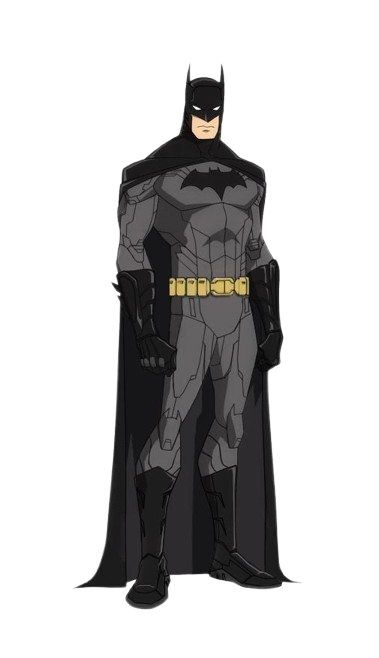
I can’t help but feel pressure to make the perfect decision in everything that I do: the perfect haircut, the perfect website, the perfect photos, and the perfect issues for this magazine. Did you know that I almost deleted everything I’ve written for this magazine several times in just the span of a week? I’ve redone my website more times than I can count, hyperanalyzed every interaction I’ve ever had with my friends, and even scrutinized the way that I walk.
Logically, perfection is impossible and that’s the allure of it. It will always be a beacon to strive for, something attractively unattainable. Only the most ambitious and anxious aim to conquer perfection, which leads to failure almost every time. I’ve been thinking a lot about my personal pursuit of perfection and how I’ve let it take over almost every aspect of my life.
But I implore you to consider that perfection is a concept made to keep you paralyzed in fear, unable to make a single decision. I’ve reached this state before, being unable to leave the house because of an irrational fear that I was going to throw up and ruin my “perfect” encounter with society that day. The only way to cure perfection is to not give it the time of day, which I want to do for this latter half of March.
In this issue, we’re going to discuss the impossibility of perfection in regards to Thomas Elliot aka Hush from Batman, the courage of fanfiction, and some media where perfection goes to die.
Overanalyzing Fiction
March’s analysis is of Thomas Elliot aka Hush from Batman, the Impossibility of Perfection, and the Batman Part 2.
Thomas Elliot is a renowned surgeon who has based his entire existence off of the Waynes. He grew up alongside Bruce and they remained friends despite both of them losing parents. The only difference is that they both have starkly contrasting opinions of wealth, family, and themselves. Thomas Elliot is really awesome. He uses his training as a surgeon to physically change his appearance to match Bruce’s. I only wish that his face was slightly different from Bruce’s to show that no matter how talented an individual is, they can never replicate another human being. This is where Tommy’s real intrigue comes in: he can never be truly perfect.
In Batman: Hush, it’s revealed that Tommy tried to kill both of his parents in order to receive their money and failed. Meanwhile, Bruce’s parents get gunned down in an alleyway and Bruce is “lucky” to inherit his fortune at a very young age. Already, Tommy is flawed in comparison to Bruce. No matter how much he will try to reach Bruce’s level of influence, fortune, renown, he will always be upstaged. That is the terrifying aspect of Hush: the fact that he will stop at nothing to reach perfection. Unfortunately for Bruce, he is perfection in Tommy’s eyes and becomes this idol for Tommy to base his personality on. We can break this down through social psychology and the concept of human mimicry to increase their competence in the eyes of others. When you want to connect with someone, you can’t help but replicate speech patterns and body language. Tommy does this on an absurd level, focusing on becoming Bruce Wayne entirely.
It is said that Tommy’s anger towards Bruce is because of Thomas Wayne saving his mother after Tommy attempted to kill him, but I think there is so much more to him than that. I really dislike when comics attempt to squish down complex characters in order to make it more palatable to an audience in general. In my opinion, Tommy’s anger towards Bruce is because of this perfection that Bruce has so nonchalantly achieved. While Bruce and the reader see him as a flawed individual who fights the same criminals every single night in some vain attempt to redeem his parents, Tommy sees the pinnacle of perfection. That is what makes him so interesting, is his core belief that he is lesser than Bruce Wayne and therefore needs to kill him in order to assert some kind of dominance.
Now to get to the rumors of Thomas Elliot being the main villain of the Batman Part 2. I hope with every fiber of my being that they hold off on Tommy. In my opinion, Batman: Hush needs the other characters like Clayface, Nightwing, Oracle, Jason Todd, Tim Drake, and Poison Ivy to be central to the story. The reader is supposed to feel like this is an epic part of Bruce’s life that includes all kinds of people from his past, and I don’t think that Matt Reeves’s universe has been set up to be that vast yet. In addition, the Riddler is a huge part of the original Hush story, with his knowledge of Batman’s identity being the central twist of the story. Personally, I don’t see Dano’s Riddler being at the center of a scheme this vast. In the Riddler: Year One, Edward is depicted as a shy person who only became the Riddler out of necessity and anger towards the systematic oppression that affected people like himself. He does harbor resentment towards Bruce Wayne that could translate over towards a Hush storyline, but it’s a stretch.
In order to make it work in any sense, the entire movie would have to heavily focus on Bruce Wayne and his relationship with society now that he’s established his relationship with being Batman. To reduce the redundancy of the Riddler, simply eradicate him from the story and make Tommy the main villain. I personally think that the magic of Batman: Hush lies in the fact that Bruce is forced to confront this later in his life as Batman, but I do think that it could be a changing point for him in the earlier years. While Tommy Elliot is the main villain, I would personally partner him with the Scarecrow (shocker!) as the B villain. I hate when Jonathan is shelved and given the lesser treatment like he had in Batman Begins, but I think if we’re going to delve into the psyche of Bruce, let’s get in there. We can also hypothesize Harvey Dent being a massive part of Part 2 (as of writing this, Sebastian Stan is highly expected for the role). As a man who can do what Batman does in the light almost as successfully, Batman sort of becomes irrelevant. This could lead to the emphasis on Bruce Wayne throughout the movie and could set up Tommy as a formidable final villain. Obviously I’m rooting for a Hush-Harvey-Scarecrow trio for this hypothetical Part 2, but who knows where the road will lead us.
Tommy Elliot fails at every turn, and his perseverance and intensification of his methods are what make him so interesting. His fruitless pursuit of perfection can be seen through his common mimicry of Bruce Wayne and his rampant jealousy that affects him long after cut brakes and shattering pearl necklaces. While I think he would be an interesting addition to the Batman: Part 2, he needs to be partnered with other villains and characters that can reflect the original Batman: Hush storyline without all the necessary background characters. All in all, Tommy Elliot is awesome, and a great addition to Batman’s rogues gallery.
Dining Room
This month’s dining room talk is about another pursuit of perfection, this time in the world of writing fanfiction.
I just read fanfiction for the first time in seven years.
I had published my first work on May 5th, 2019 and set forth the motions that would seemingly change my life forever. I was about to start at a new high school in a completely new area and be forced to make new friends. I didn’t know anything about myself, other than the fact that I loved reading and writing. Now, seven years later, I’m trying to relearn that part of myself and I started by reading fanfiction. Despite being a voracious author on Wattpad, I never indulged in the act of reading. I was far too wrapped up in my own work to focus on anyone else’s. I deeply regret that about myself, that I was so wrapped up in myself that I didn’t even support my other fellow writers who were putting their souls on the Internet for all to see. I feel as if that mirrors my life now; that I am so self-centered that I forget to look up and see what other amazing writers and artists are doing.
I feel a deep sense of urgency to pay attention to others’ work now, especially in the precarious era of Artificial Intelligence. But more importantly, I feel a deep sense of urgency to reconnect with my thirteen year old self. I told my mother that I had finished a book the other day, and all she did was tell me how much she misses when I used to read. For clarification, I didn’t just used to read, I used to read as if my life depended on it. Every flip of a page was like a heart beat, every chapter a breath. Now, every scroll seems to be the replacement.
I can document the exact time when I stopped reading: 2020. A year after I published my first fanfiction. The rise of TikTok made me insatiable for the next short video, the next “legendary reel pull,” the next “sound” that I could quote at a get-together to demonstrate how integrated I was to the ever-changing digital world. Ever since then, I feel as if I’m climbing up a mountain every time I try to read for fun. I skim the books given to me in school, I use the writing skills I gained from years of Wattpad experience to hide the fact that I didn’t want to read, and I blatantly lie in my papers.
Thirteen year old me would be ashamed.
So, to make up for lost time, I started reading fanfiction. To me, publishing any form of fanfiction is the greatest job anyone can have. To toil endlessly learning about the intricacies of a world that doesn’t belong to you and to psychologically insert yourself into the position of a character within that world is a talent that not many possess. Not all fanfiction writers can do it either, but that doesn’t matter to me. What matters is that this world created by another individual was so strongly received by someone that they spend days of their own time trying to mimic that world. It’s hard to pick a passion when the only thing you dream about every night is creating something that inspires someone as much as a fanfiction writer is inspired.
Recently, I’ve been pondering this old dream of mine: to create something that inspires someone so much that fan art, cosplay, and fanfiction is spawned from. It still keeps me up at night, the thought that I’ve given up on it somehow. I stare at my ceiling and wonder whether I will ever achieve this goal. Whether I will inspire a work of art like fanfiction out of someone. All I can do is scroll through Ao3 and hope that my kudos will inspire a fanfiction writer to keep going, unlike I did.
I will never forget the embarrassment on my friend’s face when she told me she wrote fanfiction. I was never quite able to verbalize in that moment how unashamed she should be, until now. Fanfiction is the ultimate fight against Artificial Intelligence and corporations. It is made for free without any expectation of monetary gain or fame. Courageous people, like my friend, post every day hoping to make someone feel seen. And yes, I’m even talking about the people who write smut. Courage is the lifeline of fanfiction and the world. Without the courage to take the first step or put ourselves out there, you isolate yourself from so many possibilities. You turn into how I feel now, trapped by the anxiety that courage spawns. My mother will often butcher a quote that goes: the ones who care don’t matter, and the ones who matter don’t care. So please, do not feel embarrassed to write fanfiction, do not feel embarrassed to write that essay for Substack, and go out and read some damn fanfiction.
Issue 6: To All Future Adventures
One Piece, Resident Evil 2, and Endless Adventures
Letter From the Editor
Dearest Reader,
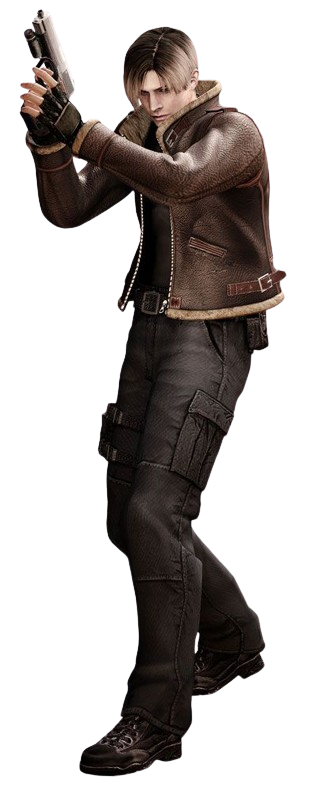
I had what I thought would be a terrible day today. I had a small breakdown, I didn’t eat, I felt trapped in my own head, and I didn’t have a stellar day at work either. But something weird happened as I was driving back home: I had my sunroof open and I turned my music up so loud that all of my thoughts disappeared. And, while I attempted to ponder the day through the noise of Moulin Rouge’s Backstage Romance, I felt myself smile because I was so happy to be alive in that moment.
It’s been rough to say the least. Most of my writing I do in advance and I can just click the post button, but I’ve been down in the dumps this second half of March. It’s been up and down for me, an endless rollercoaster I just want to get off of. While the highs have been so high, the lows have been at their lowest. I really just want to talk about the media that’s been pulling me out of a dreadful slump and making me see the good in the world, because I feel like that’s what we all need right now. I would love to tell you guys that I’m thriving right now and I have everything in my life together, but I don’t. I was about to shelve this magazine in an attempt to feel like I had some extra time but I believe in sticking to your promises no matter what. That just so happens to be a recurring theme throughout these two pieces of media that have been saving me, and I’m excited to talk about them.
This issue is called To All Future Adventures because I am optimistic about what happens next. I’m rather superstitious and have a strong belief that everything bad must be counteracted with something good, and I think that will hold true to the perils of the past few months. In this one, I talk about the media that has kept me afloat: the endless adventures of One Piece, crushing my fears in Resident Evil 2, and many more adventures to come. Thank you for reading, and I hope you enjoy.
Overanalyzing Fiction
Today I want to talk about One Piece.
Back in 2020 when anime was at its most popular, I was scared of One Piece. Currently standing at 1155 episodes, it was one of the longest anime I had ever known. I remember I had a friend tell me she was completely caught up in watching it and I was so impressed. When everything started to go downhill in March, Steel Ball Run’s first episode came out and I told my friend that it added ten years onto my life. For the first time in a while, I felt really truly happy. I remembered how anime used to make me feel like anything was possible and like I didn’t care what others thought of me. So, in an act of courage, I decided to watch the live action adaptation of One Piece. Now, I don’t know how I can ever go back.
All I knew about One Piece was that it was long, there were pirates, and Sanji existed. But hidden beneath the surface, One Piece is about chasing your dreams and keeping your promises. Luffy is, at first glance, your typical anime protagonist. He is overly happy all of the time until you realize that this is happening while his entire worldview is shattered again and again. Luffy thought that pirates were the good guys and that all of them were like Shanks, but he repeatedly runs into these horrible monsters who sail under the same name that he does. How can he call himself a pirate and be compared to the scum of the Earth? I was perplexed watching the show and watching Luffy count himself among the worst. The worst thing was that I wanted to be a pirate watching the show. The camaraderie, the neverending adventures, the community… I felt jealous of it all. Meanwhile all I could do was watch behind a screen while my goldfish brain tried to keep itself from wandering. I watched with tears in my eyes as Luffy understood the struggles of his crewmates and the people he ran into. I wondered if others thought I did the same, if I was the glue that could hold people together.
My therapist asked me whether I knew who I was. I thought it was a stupid question, because I am who those around me think I am. We are no better than what those around us think we are. Luffy will forever be seen as a horrible pirate first before being seen as a kind and understanding person. But watching One Piece, no matter how fictional or exaggerated it became, my mind started to be changed. I started thinking less about how others view me and more how I want to be. I wanted to be like this fictional character, I wanted to sail around the sea with friends I made. I always thought I was more of an Usopp. I’m scared of everything despite trying to tell myself that I am strong, and I let that hold me back from doing a lot of things. I’m scared of taking on too much and breaking, I’m scared that I’ll let others down no matter what I do, and I’m scared that I’ll never achieve my dream of being able to tell stories that really touch people. However, the beauty of One Piece lies in that no one is perfect. Luffy’s not perfect, Usopp isn’t perfect, and I’m not perfect either.
The live action adaptation of One Piece really made me think hard about myself and my life. I want adventures, I want to explore even when I’m scared, and I want change more than anything. I want to be able to put my foot on a barrel and proudly explain that I am going to tell stories that help lots of people. Until then, I’ll watch through my screen and read chapter after chapter of One Piece and live vicariously through them.
Experiment
This experiment was about challenging views of self through playing RE2.
I hate jumpscares so much I don’t watch horror movies or play any horror games. I remember when one of my friends asked me whether I wanted to play Dead by Daylight with him and I profusely said no. I can also recall refusing to watch another old friend play Five Nights at Freddy’s in front of me in fear of getting jumpscared. So, naturally, I bought the Resident Evil 2, 3, and 4 Remakes.
Since my month had been so terrible, I figured that this would just be a purchase that I would make and then never touch until I was ready. However, as soon as I opened Instagram I was greeted with a Leon Kennedy edit and decided that there is no time like the present. I booted up RE2 and grimaced as the creepy music started playing. I hate when the music is scary as well. In fact, I hated everything that happened in the first ten minutes of playing the game. I was horribly jumpscared by a zombie in the grocery store and almost started crying. I immediately regretted purchasing the game and shut it off.
In psychology there is probably a name for the phenomena when you repeatedly tell yourself something and it eventually comes true. Spending my entire life telling myself that I can’t do horror was finally coming to bite me in the ass. Or, more specifically, Leon Kennedy’s neck. Once again, my therapist told me to write down a list of adjectives that describe who I am rather than who others think I am. In a perpetual state of fear would probably be at the very top for me. So, in a brave act of saving money in therapy copays, I decided to tackle that negative view of myself by playing RE2.
It was rough at first, especially since I get engrossed in any media I consume. I gasped a lot with the Tyrant jumpscaring me, and I even gasped so loudly one time that my dog woke up from her sleep. But over time (when I reached Ada’s part in the sewers), I started to get a handle on things. I stopped being scared and I started being logical in the way I was thinking in the game and about myself. I wasn’t “in a perpetual state of fear” but I was worried about messing up. It was putting up a wall of perfection that was keeping me from enjoying horror movies, not my actual fear of them. There’s nothing more embarrassing to me than getting jumpscared in front of others. I need to laugh it off or cover it up or pretend that it was a mock gasp. But, in actuality, it’s not embarrassing at all. In fact, I should be glad I react to jumpscares because it means that I’m focused on what I’m doing.
Resident Evil 2 was kind of exposure therapy to me in the world of jumpscares. A game that I would never have played a year ago is slowly becoming one of my favorites. I learned that my perfection is actually deeper than I thought, but I also learned that my power actually lies in authentically reacting to the jumpscare rather than trying to act like I wasn’t surprised or scared.
Issue 7: Repress to Impress
Nonchalance, Noir, and Whimsy
Letter from the Editor
Dearest Reader,

I got pseudo-rejected by a man this week and I actually felt pretty ambivalent about all of it. I’m trying to wrack my brain and think of a reason why I’m not as hurt as I thought I would be. This ambivalence really scares me, especially in the world of the nonchalant, ozempic, effortless productivity mindset we all live in.
I guess that’s why this issue is called Repress to Impress because I want to dissect that feeling of wanting to do things and what happens when we repress our innermost desires or warp them to match what others will be impressed by. In this one, I talk about Pete Campbell from Mad Men, the rise of the nonchalant and whimsical, and noir films. Thank you for reading, and I hope you enjoy!
Overanalyzing Fiction
This month’s dining room talk is about the world of impressing in advertising. Introducing: A Completely Unnecessary Deep Dive into Pete Campbell’s Hunting Analogy in Mad Men Season 1 Episode 7.
The title of this one is exactly as it sounds: another line for line analysis of an expertly written monologue. This one is from Mad Men Season 1 Episode 7 and is said by one of the most disliked characters in the whole series: Pete Campbell. I’m no stranger to a Vincent Kartheiser scene. In fact, if I had a nickel for every time I overanalyzed a scene he was in I’d have two nickels, which isn’t a lot but it’s weird that it happened twice. While I’m only in the first season, I have some kind of twisted intrigue in Pete’s character. He’s the ultimate misogynist, a relic of his time shaped by the endless privilege he is unaware of. He represents nepotism within the world of Sterling Cooper and is representing our fictional character who is repressing himself in some way in order to impress the top brass. Pete is brash, egotistical, selfish, and yet in this scene you see a different side to him and one that better represents who he is as an individual as opposed to who he is as an advertising executive.
Pete is sitting in his office with his hands held low, rubbing them constantly as if nervous about something. Standing over him is the kind Peggy, who is still (unfortunately) entranced by Pete after their initial rendezvous in the first episode. After engaging in some conversation about the gun that Pete bought in exchange for the infamous chip and dip bowl that his wife’s family got for them, he looks up at Peggy and asks her whether she’s been hunting. When Peggy tries her best to answer the question, Pete tries to make a joke of it and laughs it off. Peggy then follows up with trying to relate to him in some way by telling him about seeing her cousin hunt. Just through this first exchange, we see that Pete is anxious and unhappy about his marriage. He’s used to being swept aside by everyone he knows: his parents, Trudy (his wife), Don and everyone at Sterling Cooper. No one tries to relate to him or see him as a person. That is, until Peggy shows up. Immediately, she can sense that hunting means a lot to Pete and tries her best to relate to him. Peggy does not seem like she’s looking for anything in return (a contrast to how Pete operates), but is earnestly listening and trying to connect. She does smile slightly after Pete invites her to sit down as if she’s excited he wants to talk to her, but I do think that she starts the conversation just trying to earnestly create conversation.
Pete talks about having to take the animal out with the first shot or scare it away, but follows it up with but sometimes you have to go up and finish it off. This, in a lot of ways, relates to how Pete conducts himself within Sterling Cooper. In another episode, he attempts to go behind Don’s back and pitch to a client in hopes of getting a promotion. Or, in a sense, taking the animal out with the first shot. However, Don retaliates and demands that Pete be fired for insubordination (scaring the animal away). The problem lies in the fact that Pete ends up getting out of termination through his connections and nepotism. When the hunter has every weapon at his disposal, it is only a matter of time before the animal succumbs and gets finished off. If Don does not follow Pete’s wishes, he won’t hesitate to go up and finish him off.
Pete then regales Peggy with my personal nightmare, where he tells her what he really wants to do with the animal. The rest of the monologue is rather long, so I’m going to sum it up. He wants to carry the animal back to a little cabin, where he hangs it up, cuts it apart, goes into the cabin where there is a nameless woman waiting for him who cooks it for him while he sits, watches, and finally eats it in front of her. Now, the first time I watched this I physically recoiled, but it makes perfect sense for Pete’s character. He doesn’t just want to take out the animal “tie it to the bumper and go home,” he wants to make a show of it. He wants to hang it between two trees and have a woman sit and watch his success right in front of him. He doesn’t just want to take over, he wants to destroy absolutely anyone who defies him. We can see this with how he handles his relationship with Trudy. He doesn’t just want to punish her for yelling at him, he wants to destroy her emotionally until she is forced to leave him. Until this point, we have seen Pete be brash, egotistical, selfish, misogynistic, and rude, but this seems like a turning point for the audience’s opinion of his character. He’s all of those things, but he’s also cruel. He wants women to laud his successes while those who defy him get humiliated or “cut, drained, dressed.”
While this hunting daydream is truly my worst nightmare, Peggy says “that would be wonderful.” I don’t want to speak ill of Peggy, although she is an entirely fictional character, but this shows her complacency with the way Pete conducts himself. In the very next episode, she has sex with him while being acutely aware of his marital status. She doesn’t care how Pete sees other people as animals to hunt, because she automatically fills herself into the faceless woman role and becomes complicit in Pete’s wrongdoings. She thinks that she will be safe from Pete’s destruction because she is in that womanly role, but she doesn’t consider what a hunter does when they run out of prey: they start hunting down new ones.
You may think Pete Campbell is evil, you may think he’s terrible, or you may see the emotional abuse he endures from his parents as some kind of reason why he must be this way, but this scene proves who he really is. He’s cruel, conniving, and will do anything he can to humiliate his enemies while being surrounded by praise. He is a hunter equipped with so many advantages that none of his prey stand a chance, and he’s not afraid to take the shot.
Dining Room
This dining room was about the rise of nonchalant and its final boss in the whimsical.
Being nonchalant in the face of adversity is nothing new, and it is certainly not meant to be a trend. The definition of nonchalant is appearing casual and not displaying either stress or enthusiasm. In other words, it is the suppression of your innermost feelings. I don’t mean to go Freud, but there are many problems that can arise from suppression of any part of you. For me personally, the suppression of my creativity in favor of scrolling and living vicariously through others on the Internet who were being creative in my stead ended up sending me down an anxious spiral I’m still crawling out of. Nonchalance is not good for any part of you. So why do we seek it out?
I am no stranger to wanting to appear nonchalant, in fact, it usually rose from a place of anxiety about social situations. I would relax every muscle in my face and pretend that I was calm inside to match. One day, I was buying oil at a local car shop and I walked in with my relaxed nonchalant face. I quickly scanned my surroundings so I seemed to know where I was going and walked to the back of the store. Once I was back there, I was confronted with a wall of oil. I had no idea what kind I needed, and I was being too “nonchalant” to ask for help. So I stood there for about ten minutes scanning the shelves for some modicum of information about what oil to buy for my car. The only thing worse than my anxiety to appear stressed or helpless in a store is being in an aisle for too long (I am convinced they think I’m stealing despite never having or wanting to steal anything in my life) I walked to the counter and asked for help. Long story short, nonchalance got beaten by vulnerability.
Now with the rise of nonchalant culture also comes a rise in whimsy. Whimsy or the act of being whimsical is popular around women my age because it’s basically the act of being vulnerable and wanting to go back to doing things that make you happy. Similarly to analog, its rise can also be noted in conjunction with the rise of artificial intelligence and automation of creative human activities. I particularly wanted to talk about whimsy in regards to our relationships with others being whimsical instead of nonchalant and especially our romantic relationships.
Everyone craves human connection, no matter how nonchalant or ambivalent they appear to be. They repress their vulnerability in favor of making a good impression. What’s funny about this is that it’s paradoxical to literally everything we know about how human connections are formed. As flawed humans, we can’t help but find ourselves attracted –not to nonchalance– but to vulnerable individuals. When someone cries in front of you, confides in you, or trusts you implicitly, there is no better feeling. If everyone in the world was nonchalant, human connection would only exist at a superficial level if at all.
As I said in my letter to the editor, I just got rejected by someone which never feels good. When I felt apathy and nonchalant about the whole situation, I honestly got kind of scared. I don’t want to live in a way where I feel like I can’t be vulnerable with others or myself. I don’t want to live in a nonchalant world. This makes showing your vulnerable side even more important than ever before. Repressing your emotions in order to keep up appearances and impress others is only a recipe for disaster. Choosing nonchalance over whimsy and vulnerability is a disaster.
I currently work at a library and every time I walk in the kids section I look for the Fancy Nancy books. Where others see a trend of influencers hosting Fancy Nancy birthday parties in order to capitalize on the “whimsical” crowd, I can’t help but see a bunch of little kids reading Fancy Nancy and hoping that they can be vulnerable enough with the world and with themselves to stay true to the things that they love.
I think the world would be a lot better with more whimsy and Fancy Nancy.
Issue 8: Fall Back in Love
Getting Rejected, Favorite Characters, and Loving Media
Letter From the Editor
Dearest Reader,
It’s the first time in five months that I haven’t had a 23.7 issue lined up for publication. I hate to pull the excuse card, but I have once again been going through it in my day to day life. I work almost every day of the week, I had online school going on in the background, and I would forget to take care of myself for more than one occasion. This led me to getting sick almost back to back with extreme vertigo and food poisoning. Now, I really want to change all of that and I want to shift my mindset going into the future.
This issue is called Fall Back in Love because I want to talk about reinventing the wheel with myself, my work, and my relationships over the course of the summer despite the many setbacks I’ve encountered during this stupid period of work, school, and summer internship applications. In this one, I talk about getting rejected from internships, favorite characters, and media to get me back into loving media.. Thank you for reading, and I hope you enjoy.
Dining Room
This month’s dining room talk is about the dreaded summer internship and how it’s causing me to spiral. I hope that if you are going through something similar that you can resonate with this and feel not so alone in the process.
I keep track of every cover letter I write for internships, and I’ve been applying to them since I turned 18. In two years, I’ve written cover letters for over 18 internships and I’ve eventually been rejected from every single one. Don’t get me wrong, I have had two interviews (only one-ways) so I at least know I’m being recognized by the ATS system, but each application has only ended in heartbreak and pain.
I was one of those kids who thought that I would easily get an internship and then a job offer based on the fact that these giant companies would like me. In fact, that was the only way I ever thought I would get a job within the animation/publishing space. So to almost graduate without any semblance of a future job or even an internship under my belt… it’s not exactly as I planned. It’s actually slowly destroying my mental well-being. You see, I knew what I wanted to do from a young age: I wanted to help people tell stories. As a child, I wanted to be a show writer for Walt Disney Imagineering. As a teenager, I wanted to be an associate writer for Disney Television Animation. As an adult, I feel like I have to be more practical with my choices especially in this economy that values quantity and efficiency over quality and creativity. Recently, I've been considering jobs I never considered in the first place: lawyer, psychiatrist, librarian. Could I hypothetically do all of these jobs? Yes, and that’s the problem. Now that I have more routes I can take, it’s becoming increasingly harder to choose which one to pursue. Plop chronic worrying on top of that and you’ve got a perfect storm that can make anyone with a strong childhood dream tremble with fear.
This summer, I got rejected from about five internships. The one I really wanted, Animation Business Operations at Warner Bros, hasn’t bothered to reject me yet. But, even worse, I got a one-way interview with DC Comics Editorial. I say even worse because any kind of communication is enough to get my hopes up. I started looking up where I could stay in LA as soon as I got the interview. I did surprisingly well in my interview, despite doing it when I was on vacation. I felt a sense of pride when I thought about working at DC, especially since Batman has truly been a large part of my life for so long. Then, a couple of days ago, I got rejected from DC. Even worse, they didn’t even bother to send an automated rejection email to me. It’s moments like these that make you regret wanting to go into the entertainment industry at all.
Furthermore, with more creators dipping out of the industry on their own accord, I’ve been scared about whether my dream is really worth it in the first place. Wanting to be in entertainment is something that I’ve wanted so badly for so long, so to see people who have achieved my dream decide of their own free will to leave is truly earthshattering to me.
I can’t help but think that it’s a sign that I need to figure out who I am without the industry before I even contemplate getting into the industry in the first place.
Overanalyzing Fiction
Since May is all about reconnecting to things you enjoy, I thought the Riddler from Batman was finally a fitting addition to overanalyze.
I like the Riddler mostly because of how much variation different versions of his characters can have. If you had a line-up of Frank Gorshin, Jim Carrey, Cory Michael Smith, Paul Dano, and Wally Wingert’s Riddlers, they are all almost completely different from each other. Each one has different beliefs in themselves, the world around them, and how they occupy their specific world.
For my favorite versions of the Riddler, I want to talk about both Paul Dano’s Riddler and Wally Wingert’s Riddlers from the Arkham games because they are incredibly stark contrasts to each other. Also, shout out to Paul Dano for writing Riddler Year One, which provides loads of insight and is the basis for most of my opinions on his character. To separate them, I’m going to be calling them Nashton for Paul Dano’s Riddler and Nigma for Wally Wingert’s Riddler. Let’s start with Nashton, who is a shy accountant working a dead end job. He doesn’t have the confidence to talk to his boss, never mind the confidence to become the Riddler. He sees puzzles as a solace to escape the trauma and shitty world view bestowed upon him through the torment he received as a child. In addition, he has a very specifically good view of Batman, who he initially believes is “hope incarnate” and going to save Gotham from the hellhole he believes it has become. However, the heinous actions Nashton uncovers leads him to assume the role of jury, judge, and executioner himself, and leads to him becoming the Riddler to help Batman. Inversely, Nigma is extremely confident in himself, despite a similar traumatic upbringing. He initially worked at Gotham PD in the Cybercrimes division and learned about the wrongdoings of government officials there. Surprisingly, Nigma takes a similar approach to Nashton through hoping that Batman would agree with his methods of curing evil (blackmail), but ends up finding the Dark Knight incredibly flawed compared to him. Opposed to Nashton, whose world view and view of himself shatters when Batman doesn’t agree with him (leading to an ingenious scene acted by Dano, the infamous “NO NO NO NO” and the screaming, which I will defend until I die), Nigma uses that anger to finally become the Riddler and assume the name Edward Nigma.
The nuances of each of these characters does not separate them, but bind them together to make a wholly interesting villain who is hellbent on convincing Batman that he is right and Batman (and everyone else) is wrong. And, to be even more cool, this separation of me vs them results in the isolation of Nashton and the god complex of Nigma throughout their respective media. Nashton, despite every attempt to do something with himself and every attempt to connect with someone he views very highly, will always be alone, whether that be in his little dingy apartment or in a cell at Arkham. Nigma, despite every attempt to prove Batman was wrong about him and prove that he is better than Batman, will always see himself as alone because no one could ever reach the level of intellect that he has. Both characters, while different and similar in their own ways, show how amazingly complex the character of the Riddler is. Above all of the minutiae, the Riddler is a character who will always be alone and will continue to be alone until he eventually becomes -ironically- smart enough to admit his wrongdoings.
Issue 9: Edit and Reset
Letter From the Editor
Dearest Reader,

There’s something I haven’t really told you yet… I am doing the Disney College Program again starting in August. This means that there’s going to be some changes to the bimonthly 23.7 schedule because of how busy it gets when you’re down in Florida. Therefore, this issue is actually the halfway point for the rest of the year! The issues that remain are May 2, June 1, June 2, July 1, July 2, August, September, October, November, and December.
I just want to take this moment to say thank you if you are reading this. I know these haven’t been very… um… popular on Substack so for you to be reading this sure means a lot. I don’t know how the future of Substack or 23.7 is going to look but I hope that you tag along to see what happens. However, it is because of this massive possible reworking that I want to take this entire issue to edit past issues and make sure that the first half of the year is taken care of before I start to worry about the second half. I am also going to decide whether I’m individually posting the articles on Substack, BUT that all to say this is kind of the “self-care” issue where I stop constantly writing and start editing everything.
Thank you all for understanding, and I promise the next one is going to be here before you know it!